The products at a glance
| Product | What it does | What it does not do |
|---|---|---|
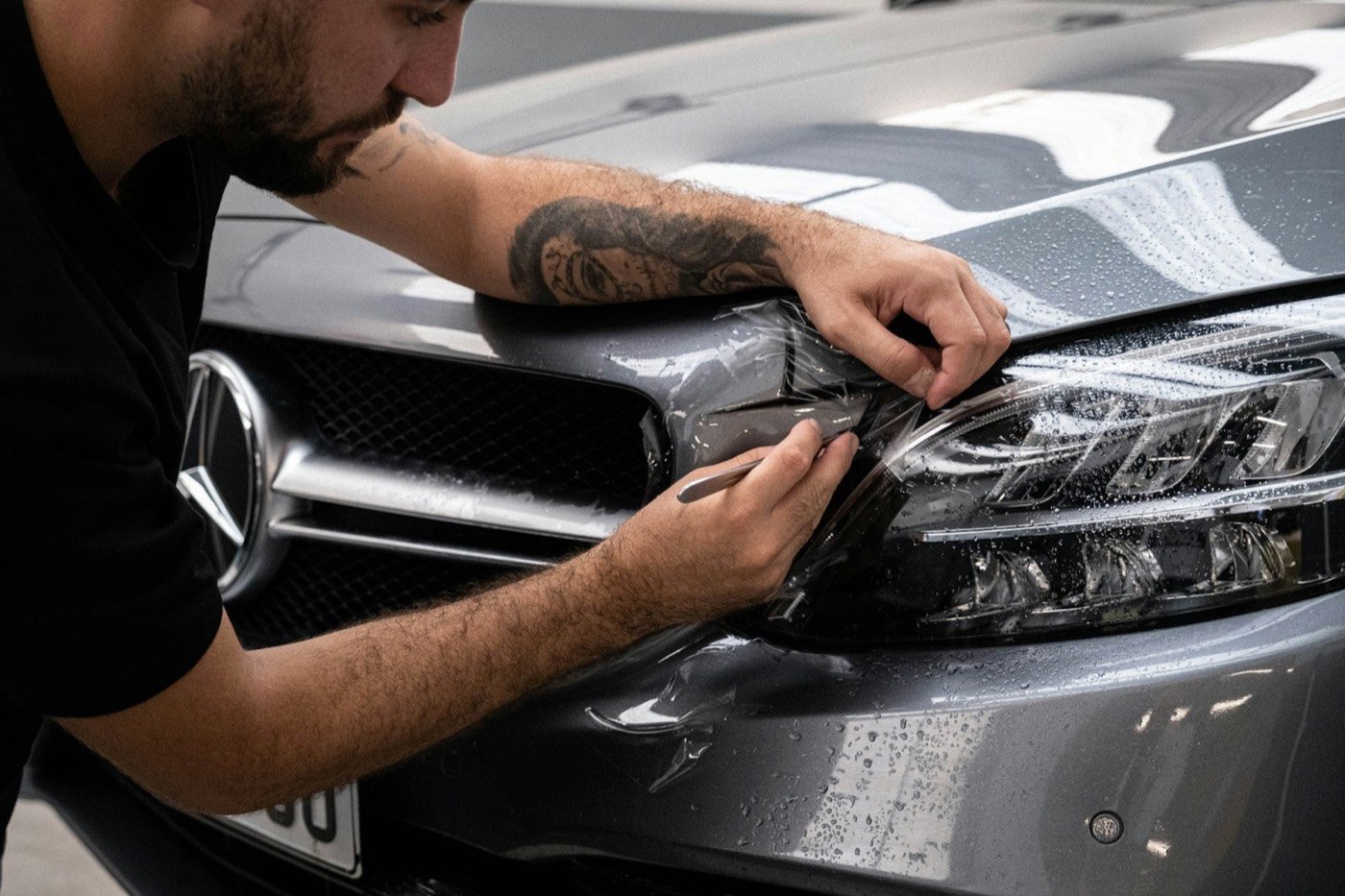
| Paint protection film (PPF) | Clear urethane film that absorbs rock chips and light scratches; most current films self-heal light swirls with heat. | Stop hail dents, deep gouges or key scratches, or hide chips that were already in the paint. |
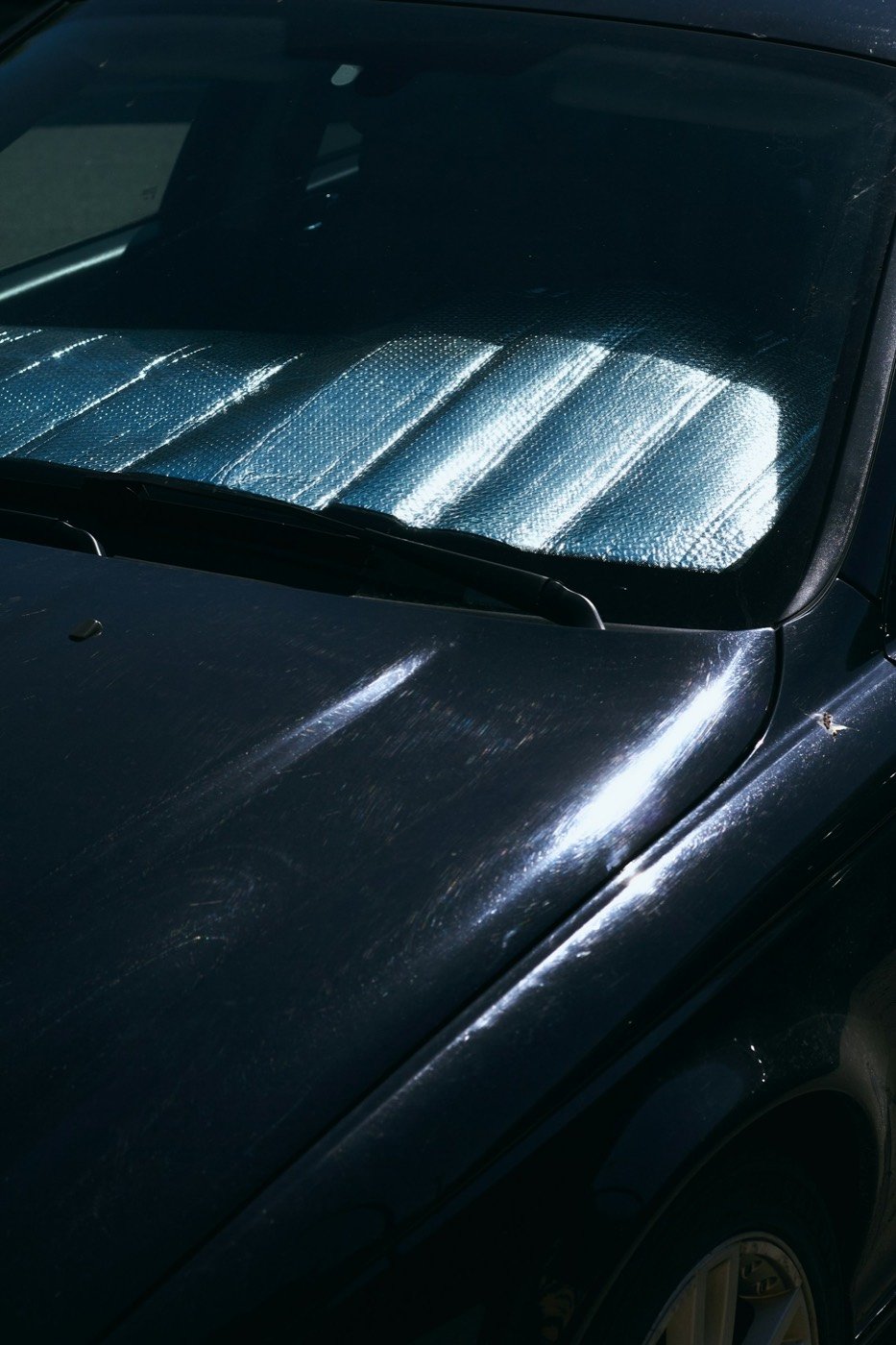
| Ceramic coating | Bonds to the clear coat (or on top of PPF) and cures into a thin, slick layer. Water beads, bugs and bird droppings release more easily, and it adds some UV resistance. | Stop rock chips, or make paint scratch-proof, whatever the marketing says. |
| Wax or sealant | The same kind of job as a coating, thinner and shorter-lived; cheap and easy to do yourself. | Last long in Texas heat; expect to reapply often. |
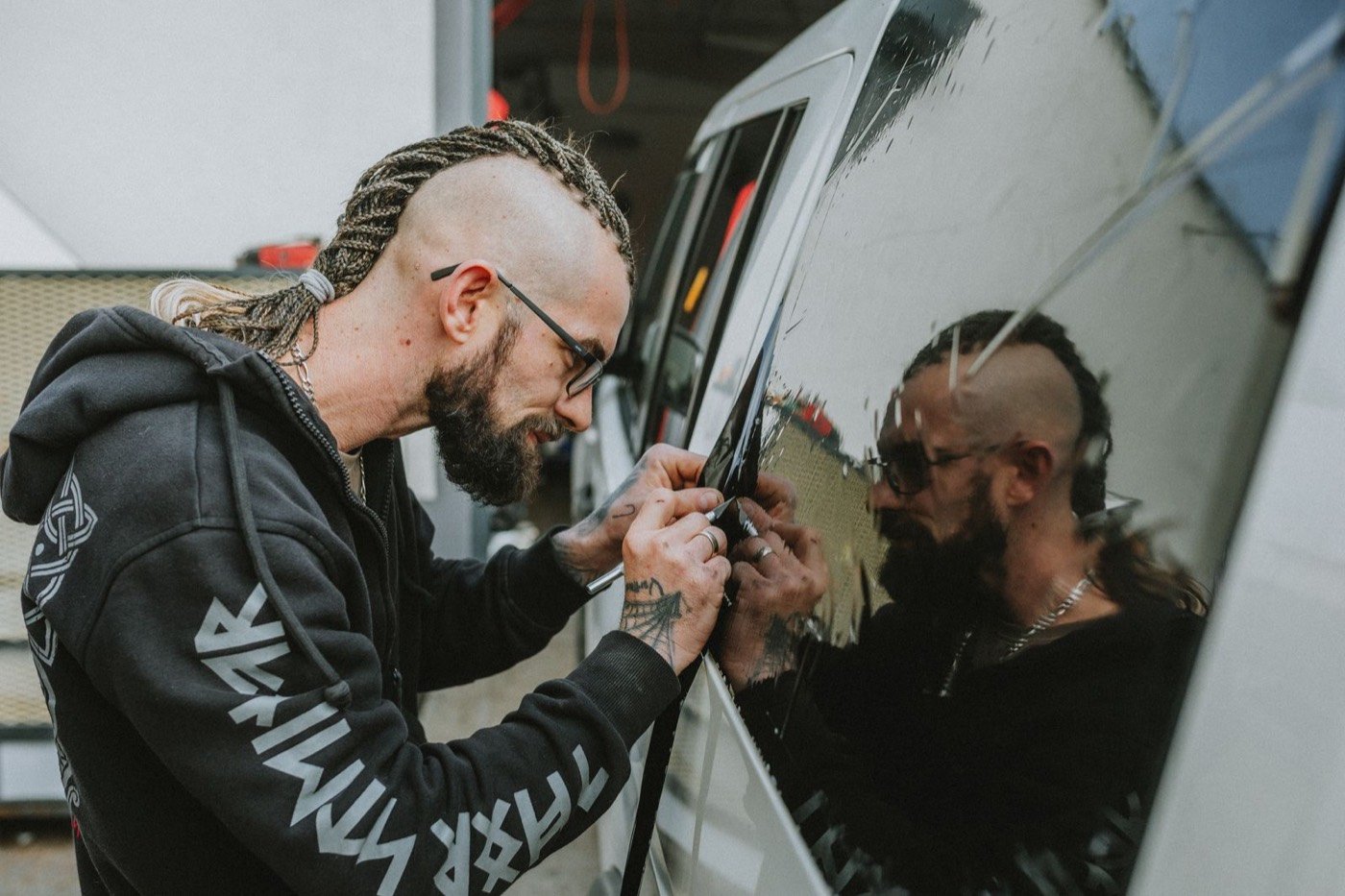
| Window tint | Cuts heat and glare. Ceramic tint can block heat without being very dark. | Go as dark as you like on the front side windows; Texas law sets a limit. |
Paint protection film
PPF is the answer to rock chips on the bumper, hood, mirrors and the area behind the wheels. If you drive a lot of highway miles, especially through construction zones, it is the product that does the most for the front of the car. It is not cheap, and a poor install shows edges and bubbles, so the installer matters as much as the film.
Common coverage packages:
- Partial front: bumper, the leading part of the hood and fenders, and mirrors.
- Full front: the whole hood, fenders, bumper and mirrors.
- Full body: every painted panel.
Expect the car to stay with the shop a day or more for full-front PPF. Get existing chips touched up or corrected first, because they stay visible under the film.
Ceramic coating
A coating's job is chemical and cosmetic, not physical. The car stays cleaner, washes faster and resists etching from bird droppings and bugs, which matters when a car sits outside in a Texas summer. The catch: a coating locks in whatever is underneath it. It is only as good as the paint correction (machine polishing to remove swirls and light scratches) done before it goes on, so ask what correction is included.
Coatings can go on top of PPF. Many owners do PPF on the front and a coating over the whole car.
For hail, nothing you apply to the paint helps.
Wax and sealants
If the budget is tight, a good sealant and careful hand washing go a long way. They are fine for a car you keep washed. They just wear off faster in Texas heat, so plan to reapply more often than the bottle suggests.
How to choose
- Lots of highway miles: PPF on the front at minimum.
- You mostly want gloss and easy washing: a ceramic coating, alone or on top of PPF.
- Tight budget: a quality sealant, reapplied regularly, plus careful washing.
- Worried about hail: none of the above. For hail, nothing you apply to the paint helps. Covered parking and a padded cover help before a storm, and paintless dent repair fixes the damage afterward. See the hail season guide.
- Heat and glare: ceramic window tint within the legal limits below.
Window tint and Texas law
Texas regulates tint by how much visible light passes through the glass and film together, and by how reflective it is. Under Transportation Code 547.613:
- Front side windows: at least 25% light transmission and no more than 25% reflectance. This is the limit most people bump into.
- Rear side windows: exempt, any darkness.
- Rear window: any darkness if the car has outside mirrors on both sides.
- Windshield: a strip at the top only, no lower than the AS-1 line (a small marking near the top edge of most windshields) or five inches from the top, and no red, blue or amber. DPS says clear UV film is allowed on the whole windshield.
- Label: the installer must place a compliance label between the film and the glass. A shop that skips it can be fined up to $1,000.
Texas ended annual safety inspections for personal vehicles in 2025, but the tint rules did not change; they are still enforced at traffic stops. A film rated 30% on factory glass that already blocks some light can end up below 25% combined, so ask the shop to meter the front glass after install. The Texas tint law guide covers medical exemptions, and the tint preview lets you compare shades.
Questions to ask an installer
- Which film or coating brand and product line will you use, and are you an authorized installer for that brand? Manufacturer warranties often depend on professional or authorized installation.
- Do you cut patterns with a plotter, or trim by hand on the car? If by hand, how do you protect the paint from the blade?
- Will edges be wrapped around panel edges, and will you remove badges, lights or trim to get there?
- What paint correction is included before the film or coating goes on, and is it priced separately?
- Who registers the warranty, what does it cover (yellowing, cracking, peeling, bubbling), and what voids it?
- How long will the car stay with you, and what are the aftercare rules: first wash, pressure-washer distance, which soaps?
- Can I see a car you finished recently, ideally one that is a few months old?
- If film lifts or bubbles in the first weeks, what is your policy for fixing it?
- For tint: will you meter the front windows after install and write the reading on the invoice?
Choosing a shop
- Ask to see cars they have done recently, and look closely at how they wrap edges.
- Get the film brand and warranty in writing.
- Plan around the downtime: a full-front PPF job can keep the car at the shop for a day or more.
Find independent PPF, tint and coating shops in DFW, Houston, Austin or San Antonio.
Sources
- Texas Transportation Code, Chapter 547 (Sec. 547.613 and 547.609) (checked October 2026)
- Texas DPS, window tinting standards (checked October 2026)
- Texas DPS, vehicle safety inspection changes from January 2025 (checked October 2026)
- Film versus coating versus wax distinctions: general industry knowledge, summarized by Range & Road; check your installer's product sheet for specifics (checked October 2026)
Some links on this site may earn us a commission at no cost to you. We only recommend categories and products we would use ourselves. Details.