What Texas heat actually does
Summers are long and hot in all four big metros (see the local notes below). In Dallas–Fort Worth, for example, the National Weather Service office in Fort Worth describes July and August highs as consistently in the 90s and often 100 F or more, with overnight lows that occasionally stay above 80 F. That last detail matters for EV owners: on those nights, a parked car's cooling system keeps working long after sunset.
Heat hits an EV in two ways. First, range. FuelEconomy.gov, run by the Department of Energy and EPA, says air conditioning is the main reason efficiency drops in hot weather, and the percentage hit can be larger for EVs than for gas cars. Second, battery aging. Research from the National Renewable Energy Laboratory found that high temperatures, a high state of charge and frequent deep cycling all speed up battery wear, and that cooling the battery while parked helped in hot climates. Those studies are from 2012 to 2015 on older battery designs, so read them as direction, not precise numbers.
The good news is that most of the fix costs nothing: a few settings, a habit of staying plugged in, and shade wherever you can find it.
Settings first (free)
- Cabin Overheat Protection. Tesla's version runs the A/C, or only the fan, when the cabin goes above 105 F (40 C). It is there to keep the interior from getting dangerously hot while parked. It is not a substitute for checking the back seat.
- Precondition before you leave. Tesla suggests starting climate control 30 to 45 minutes before departure. Do it while the car is still plugged in and the energy comes from the wall rather than your range.
- Precondition before fast charging. Navigate to a Supercharger using the car's Trip Planner for 30 to 45 minutes before you arrive so the battery reaches the right temperature. Tesla notes that in extreme heat the car may not show its preconditioning message but still prepares the battery.
- Do not keep checking the app. Each check wakes the car and uses energy. Let it sleep.
- Park facing away from the afternoon sun when you have the choice.
Stay plugged in when you can
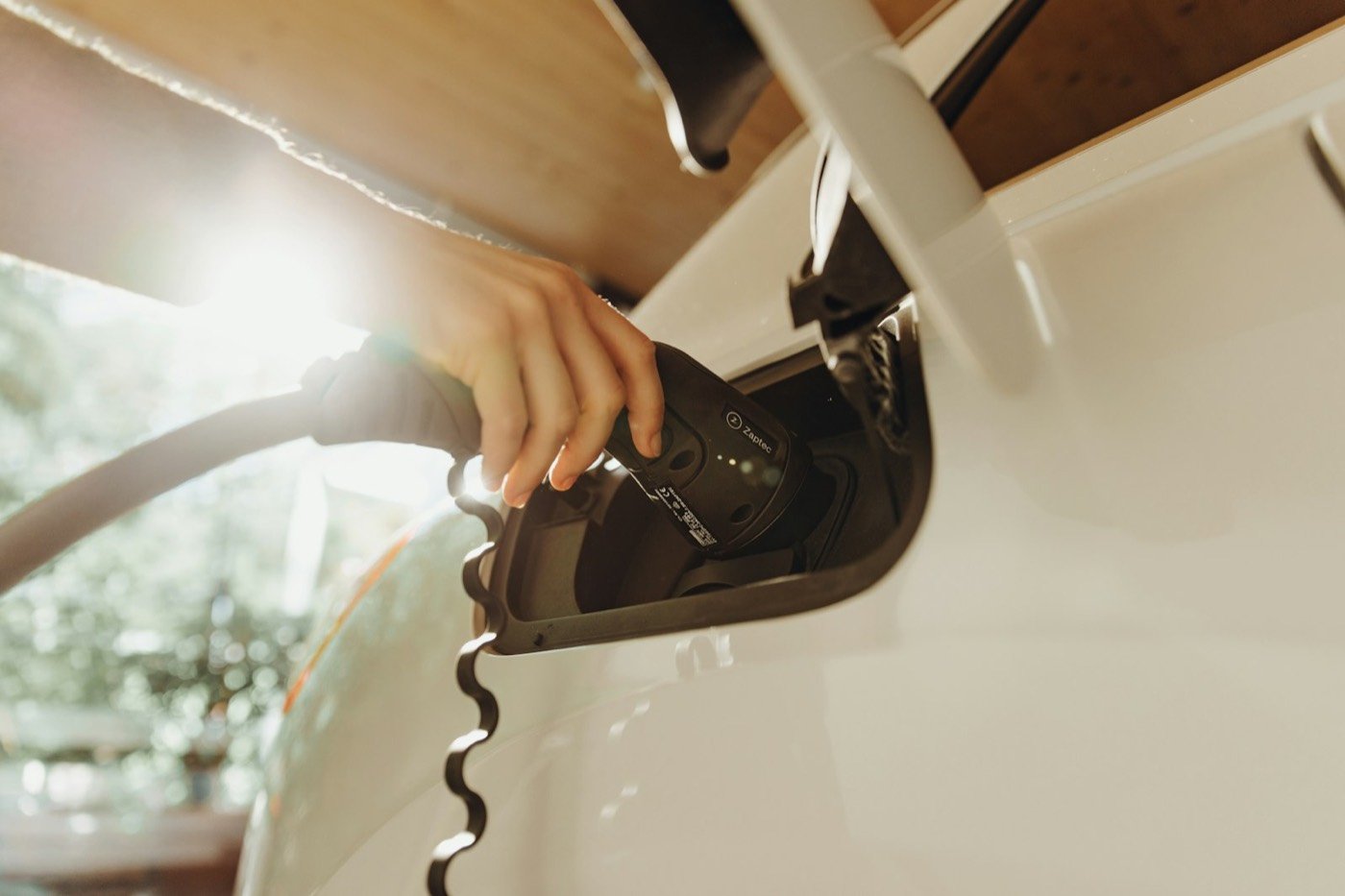
Tesla's own hot-weather advice is simple: when parked, leave the car plugged in, especially with Cabin Overheat Protection or preconditioning turned on. The charger then supplies the energy for cooling, and the battery does not have to.
- Charge to your daily limit, not 100%, unless you need the range for a trip. A high state of charge (how full the battery is) in heat is one of the conditions NREL linked to faster aging.
- Leave the car plugged in on very hot days so it can manage its own temperature from the wall.
- Use scheduled charging to finish in the cooler early-morning hours, and line it up with your electricity plan's cheaper window. Where you can choose a retail plan, as in most of DFW and Houston, some plans have discounted or free overnight hours; our DFW electricity plans guide explains what to check. Austin Energy and CPS Energy (San Antonio) customers cannot pick a plan; see the Austin and San Antonio pages for their EV programs.
If you do not have a dedicated home circuit yet, the home charging guide explains the options. Any new 240 V circuit should be installed by a licensed electrician.
Planning range in July and August
- Leave more buffer on summer road trips, and more again on windy days.
- Set the A/C a degree or two warmer once the cabin has cooled down; FuelEconomy.gov lists this alongside pre-cooling and shade.
- Expect the car to use some energy while parked in a hot lot, especially with Cabin Overheat Protection on. That is normal.
Shade and glass
- Glass-roof sunshade for cars with a glass roof: the biggest comfort gain per dollar.
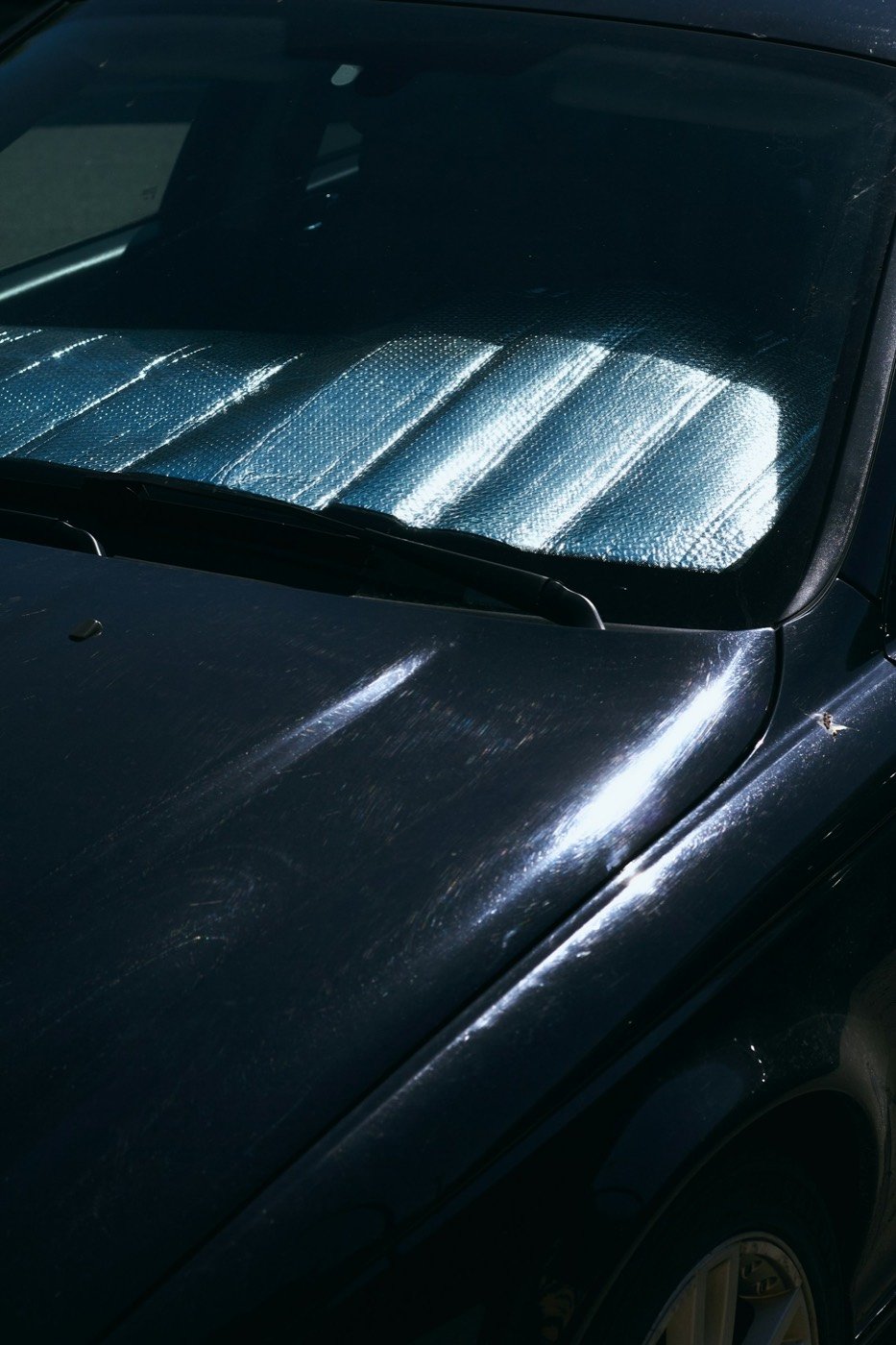
- Windshield sunshade for daytime parking at work or the store.
- Covered parking. Shade helps with heat and doubles as hail protection in spring; see the hail season guide.
- Ceramic window tint. It can cut heat without going very dark, which matters because Texas limits how dark front side windows can be.
Tint, briefly, and legally
Under Texas Transportation Code 547.613, front side windows must let through at least 25% of light (measured with the glass) and be no more than 25% reflective. Rear side windows are exempt. The rear window can be any darkness if the car has outside mirrors on both sides. A windshield strip is allowed at the top only, and DPS says clear UV film with no darkening is allowed on the whole windshield.
One practical catch: a film labeled 30% on factory glass that already blocks some light can end up below 25% combined. Ask the shop to meter the front windows after the install and write the reading on your invoice. Our Texas tint law guide has the details, and the tint preview tool shows what different shades look like. Tint shops are listed in our directory for DFW, Houston, Austin or San Antonio.
Accessories that help
- Light-colored or breathable seat covers if your seats get hot to the touch.
- A reflective windshield shade sized for your car.
Skip touchscreen screen protectors: Tesla's owner's manual cautions against them (phantom touches, static damage, not covered by warranty).
Our accessory finder can suggest a short list for your car.
Local notes
- DFW: NWS Fort Worth describes July and August highs as consistently in the 90s and often 100 F or more, with some nights staying above 80 F.
- Houston: the heat comes with humidity. In August 2023, Bush Intercontinental tied its all-time record of 109 F and Hobby set a new one, according to NWS Houston/Galveston. See the Houston page.
- Austin: based on NOAA records, Camp Mabry averaged about 31 days a year at 100 F or hotter from 1991 to 2025, with 90 such days in 2011. See the Austin page.
- San Antonio: the NWS 1991-2020 normal is 18 days a year at 100 F or hotter; 2023 set the record with 75. CPS Energy also charges more for summer usage above 600 kWh a month, which an EV can push a household over. See the San Antonio page.
Sources
- Tesla Model Y owner's manual, touchscreen care (caution on screen protectors) (checked October 2026)
- Tesla Model Y owner's manual, hot weather best practices (checked October 2026)
- National Weather Service Fort Worth, DFW climate narrative (checked October 2026)
- NWS Houston/Galveston, August 2023 climate summary (checked October 2026)
- CenterPoint Energy electric utility FAQ (retail choice in Houston) (checked October 2026)
- PUCT, municipal utilities and co-ops FAQ and Austin Energy service area (checked October 2026)
- NOAA Regional Climate Centers, ACIS data for Austin Camp Mabry (checked October 2026)
- NWS Austin/San Antonio, San Antonio temperature rankings and monthly normals (checked October 2026)
- CPS Energy, residential electric rate (checked October 2026)
- FuelEconomy.gov, driving more efficiently in hot weather (checked October 2026)
- NREL, climate control and battery life (2012) and battery thermal management (checked October 2026)
- Texas Transportation Code, Chapter 547 (Sec. 547.613) (checked October 2026)
- Texas DPS, window tinting standards (checked October 2026)
Some links on this site may earn us a commission at no cost to you. We only recommend categories and products we would use ourselves. Details.